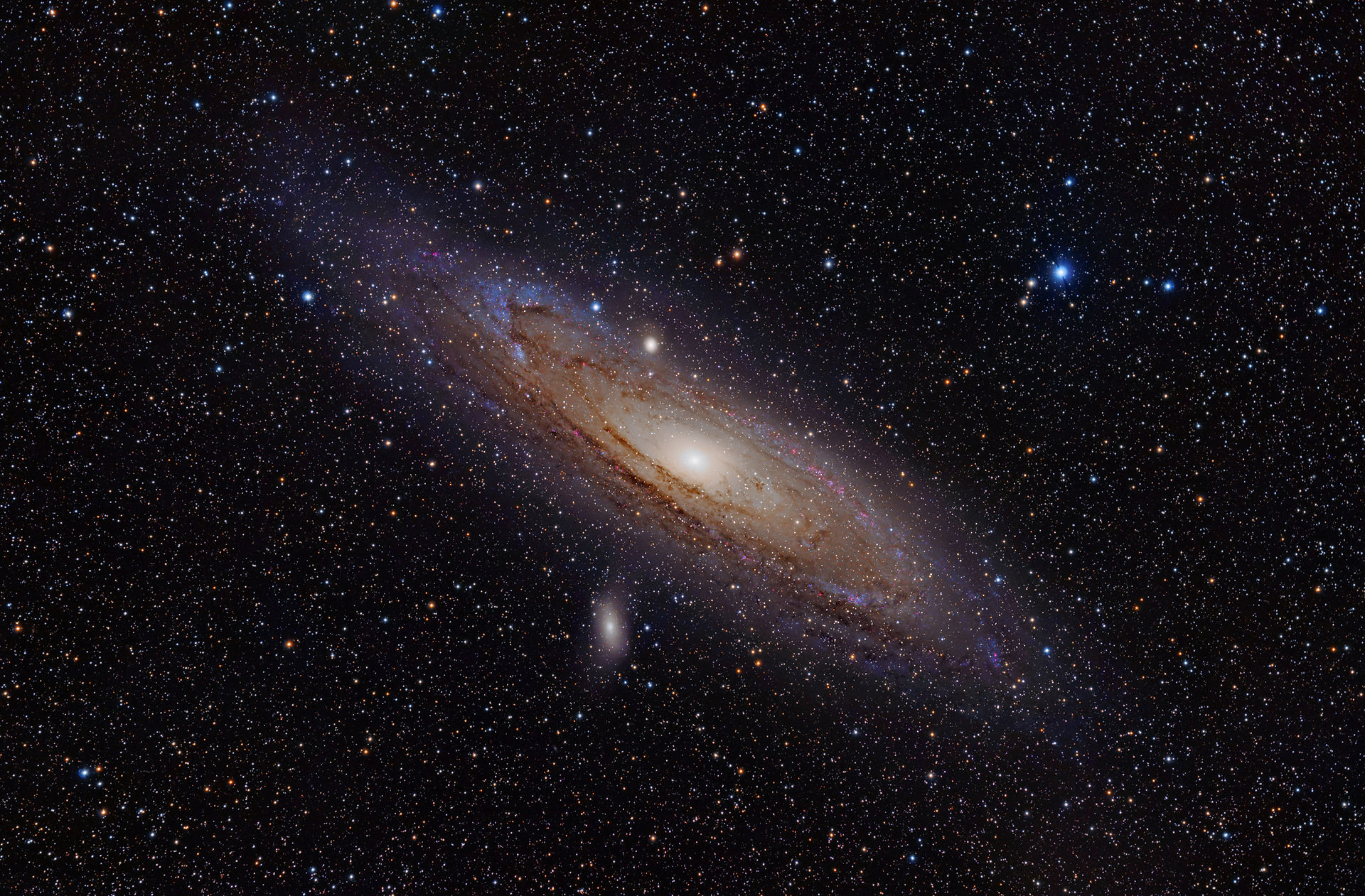

Giant of the Solar System
- spacecrewemail
- Mar 31, 2021
- 2 min read
Updated: Apr 2, 2021

After the recent guide to observing the Andromeda galaxy SpaceCrew has decided to break away today and take you on a discovery of the undisputed giant of the solar system.
No, we are not talking about the great gaseous planet Jupiter but the highest mountain in the entire star system. You may already know this, but this title is still held by Mount Olympus, an enormous volcano created millions of years ago on the Martian surface. According to the most recent estimates, it is capable of occupying an area slightly larger than the entire Italian peninsula. Moreover, Its height is about three times Mount Everest's, the largest mountain on Earth in the Himalayan chain, and it would reach a height of 27 km into the sky.
However, if we go back to its size and study the topographical data provided by the satellites we can go into more detail about its dimensions. To be exact, it has a crater (or rather a volcanic caldera) almost 60 km wide, 85 km long and 3 km deep, making this imposing volcano the most active on the entire Martian surface. Thanks to data, it turns out that Mount Olympus is of the 'shield' type and therefore its slope is gentle - extending more in width than in height... One interesting thing, however, is that the volcano always remains fixed in the same place without any shifts or jolts typical of terrestrial volcanoes (an example: those in Hawaii). This is mainly caused by the lack of tectonic plates which, unlike on Earth, are not present on Mars.

The Discovery
Mount Olympus was first observed by the astronomer Giovanni Schiapparelli who during an observation in 1877 found part of the surface of Mars completely covered in snow. He then went on to study that white glow, which was too small to be a glacier, and ended up hypothesising the presence of a large mountain... Now we know instead that that white glow, observed almost 200 years ago, is actually a large deposit of frozen carbon dioxide.
Observation
Mount Olympus can be seen when observing near the Martian equator, moving towards the planet's north pole. To be able to observe it visually you will need a magnification of about 200x (to see it clearly) and obviously optimal weather conditions.
I would like to remind you, however, that the problem of the Martian and terrestrial rotational motions may arise, and therefore you may not be able to observe it at certain times of the year... I therefore recommend a quick look at programmes such as "star walk 2" or "Stellarium" to see that Mars will be on show that day.
Page instagram ➡️➡️➡️➡️➡️ @_spacecrew
Telegram ➡️➡️➡️➡️➡️ @spacecrewgroup
Mars photo in 3D by @team41house
If you want to find out more, here is another post you might like:
We apologise for possible typing errors within the post, if there are any please contact us.


Comments